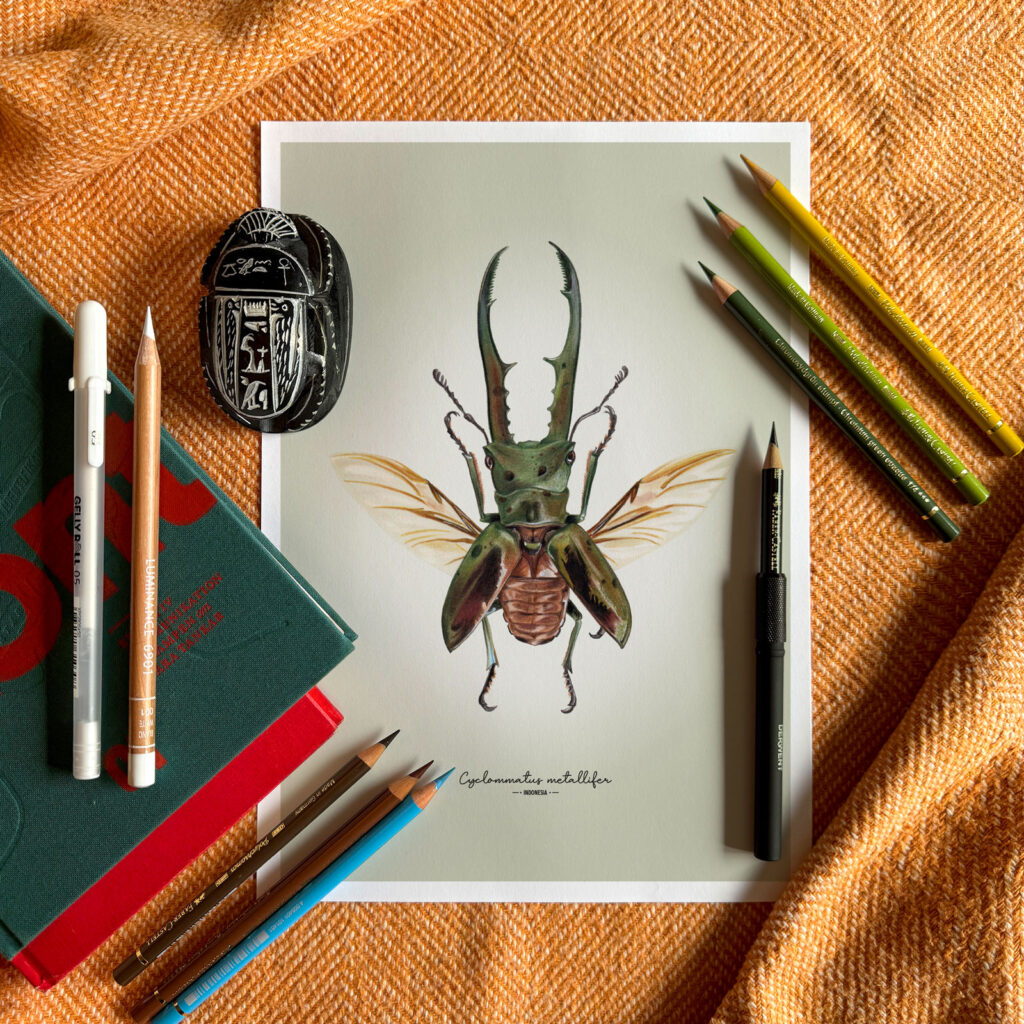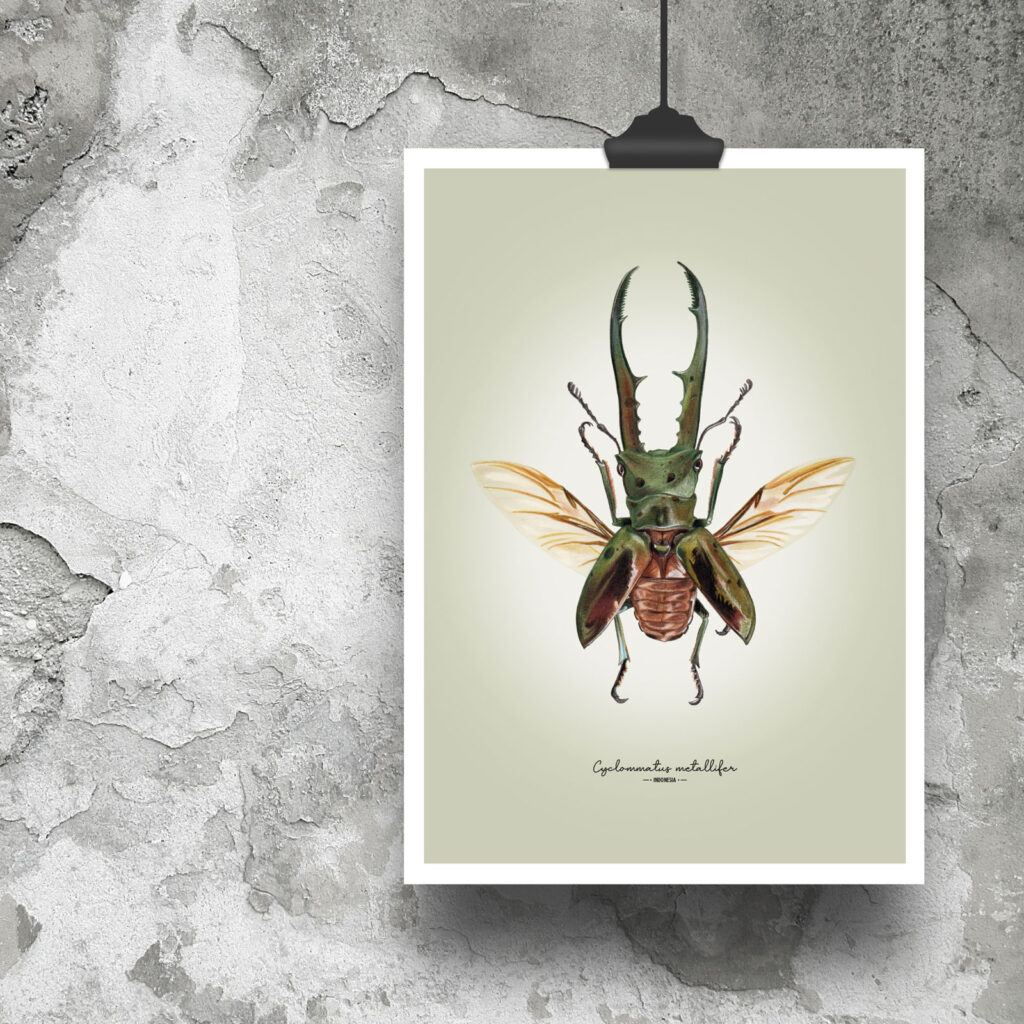
The Metallic Stag Beetle
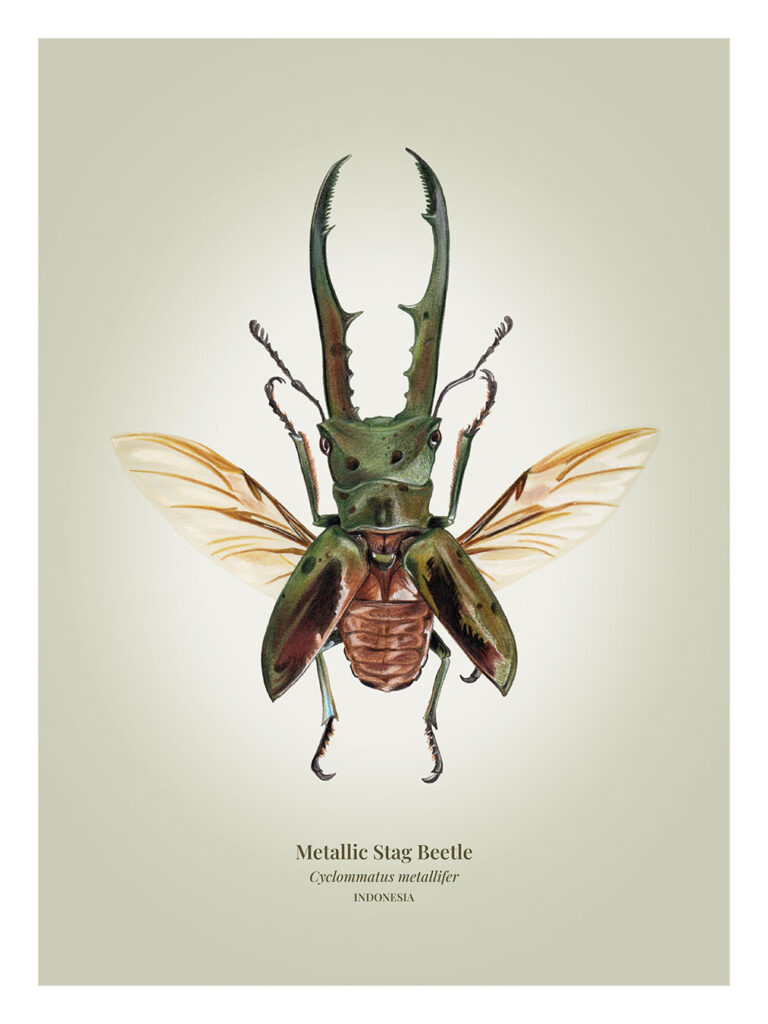
Cyclommatus metallifer
Indonesia · Family Lucanidae · First described by Boisduval, 1835
The Metallic Stag Beetle is one of those species where the closer you look, the more questions you have. From its shimmering exoskeleton to the improbable weight of its mandibles, it’s a beetle that rewards attention.
Where it comes from
Cyclommatus metallifer is found across Indonesia, primarily on the islands of Sulawesi and the Maluku Archipelago, where it inhabits tropical and subtropical rainforest. It’s a beetle tied to dense, humid forest — the kind of place where decaying hardwood is plentiful and the canopy keeps the air thick and warm year-round. The species was first formally described in 1835 by the French naturalist Jean Baptiste Boisduval, based on early specimens likely originating from Sulawesi. Since then, taxonomists have identified six subspecies, each associated with a specific island or island group — subtle variations in colour, mandible structure, and size that tell a quiet story about geographic isolation over millennia.
That colour
The name metallifer — Latin for “metal-bearing” — doesn’t oversell it. The beetle’s shimmering surface can appear golden-green, bronze, or polished silver depending on the light, and it isn’t produced by pigment at all. Instead, the exoskeleton uses structural coloration — a microscopic layering that bends and reflects light in a way similar to what you see in peacock feathers or morpho butterflies. In practice, this means the beetle looks different depending on the angle you hold it, the quality of light, and even the time of day. It’s the kind of detail that a photograph can gesture at but rarely fully captures — which is part of what drew me to study this species closely.
Bring this beetle home
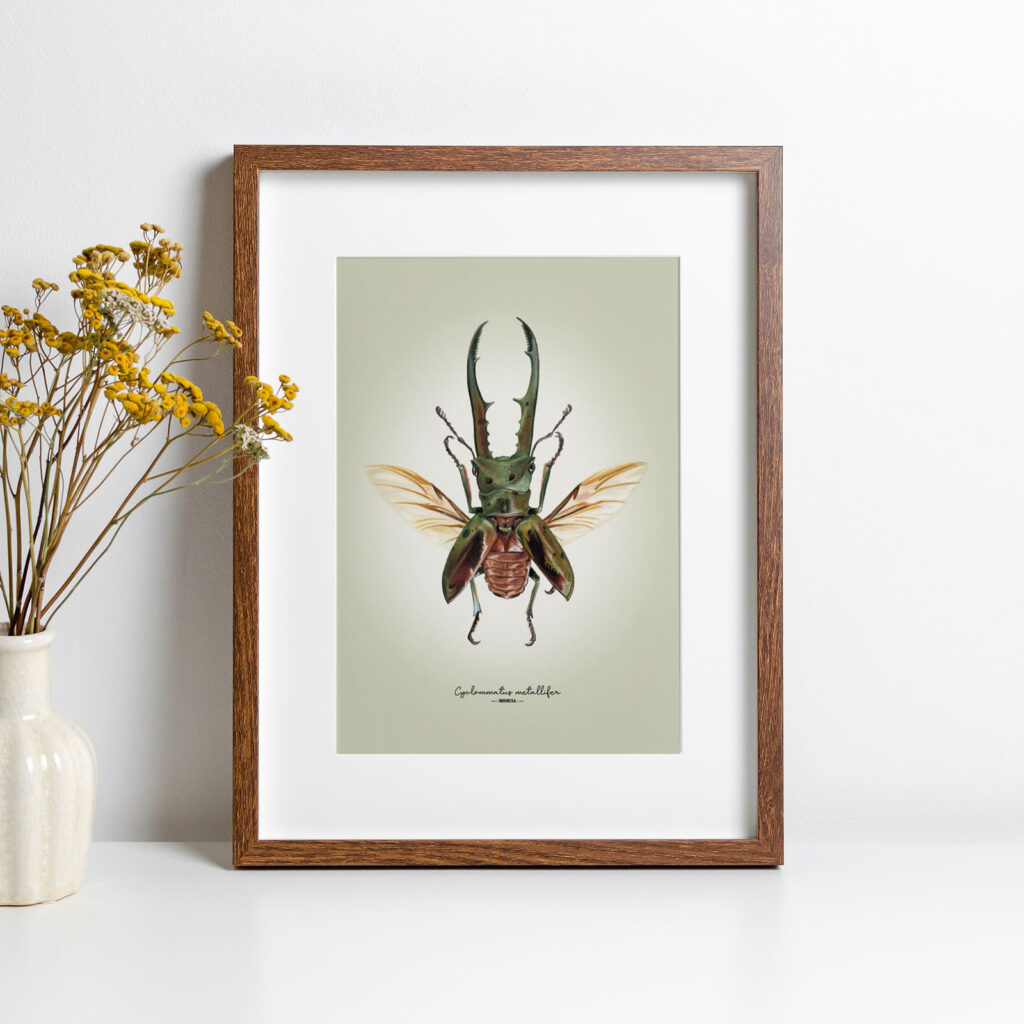
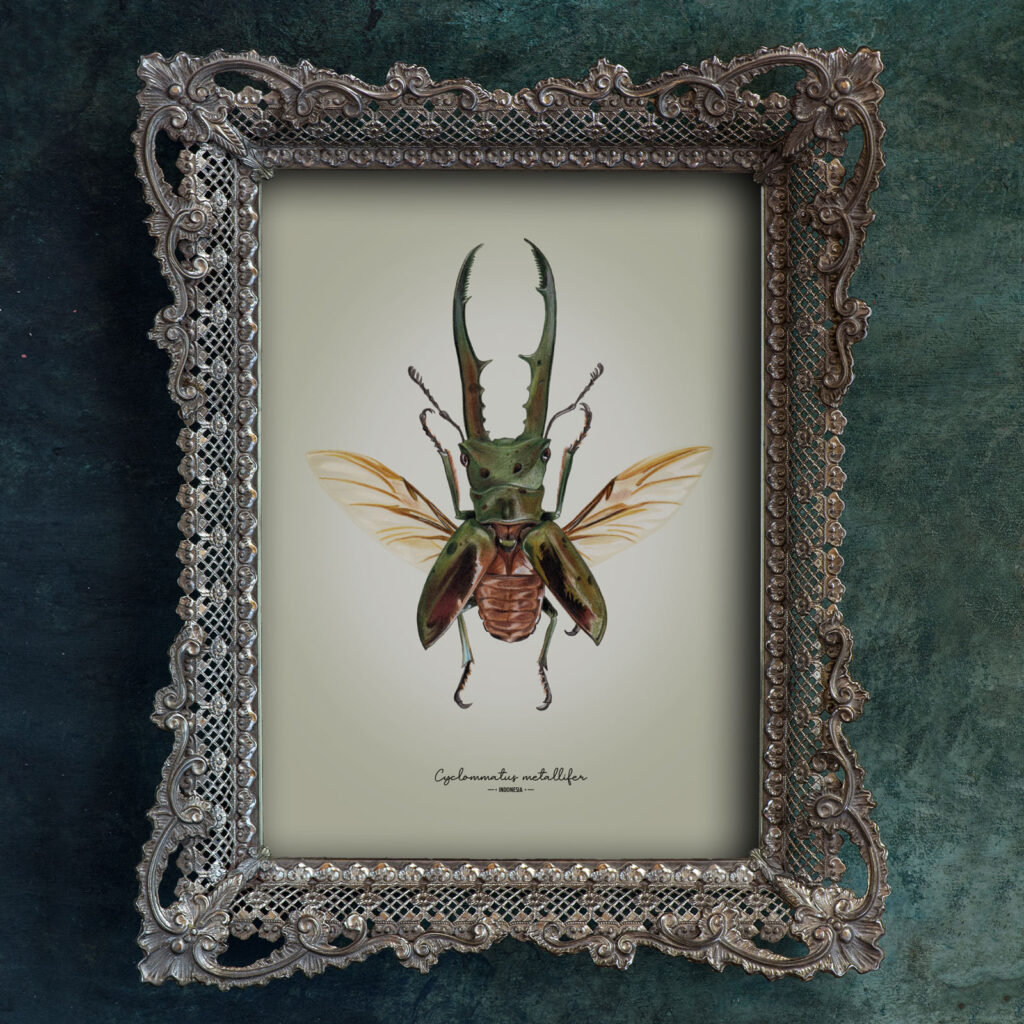
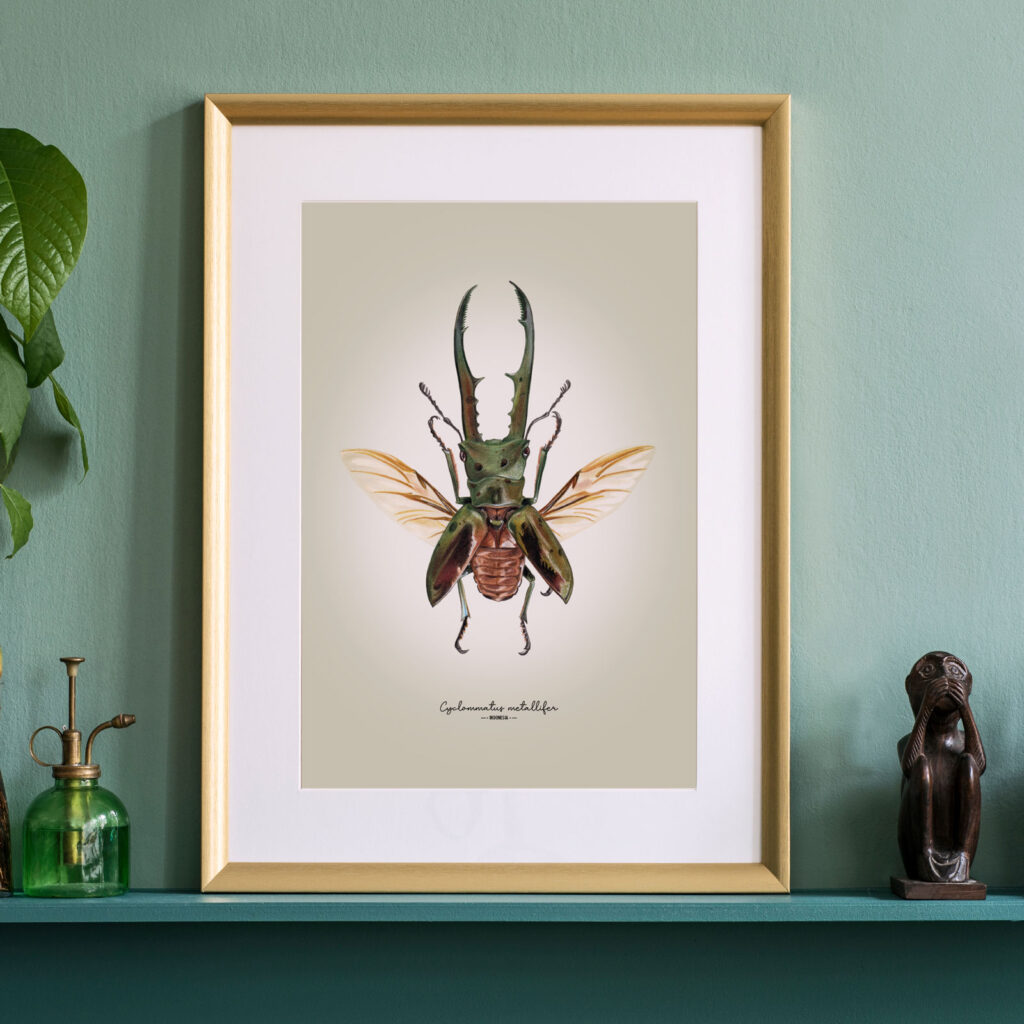
This illustration is available as a fine art print — made to be looked at up close, just like the real thing.